
Nine Lessons of LifeFamily course

A family course in nine parts

Talking about difficult things, without interrogation or lectures

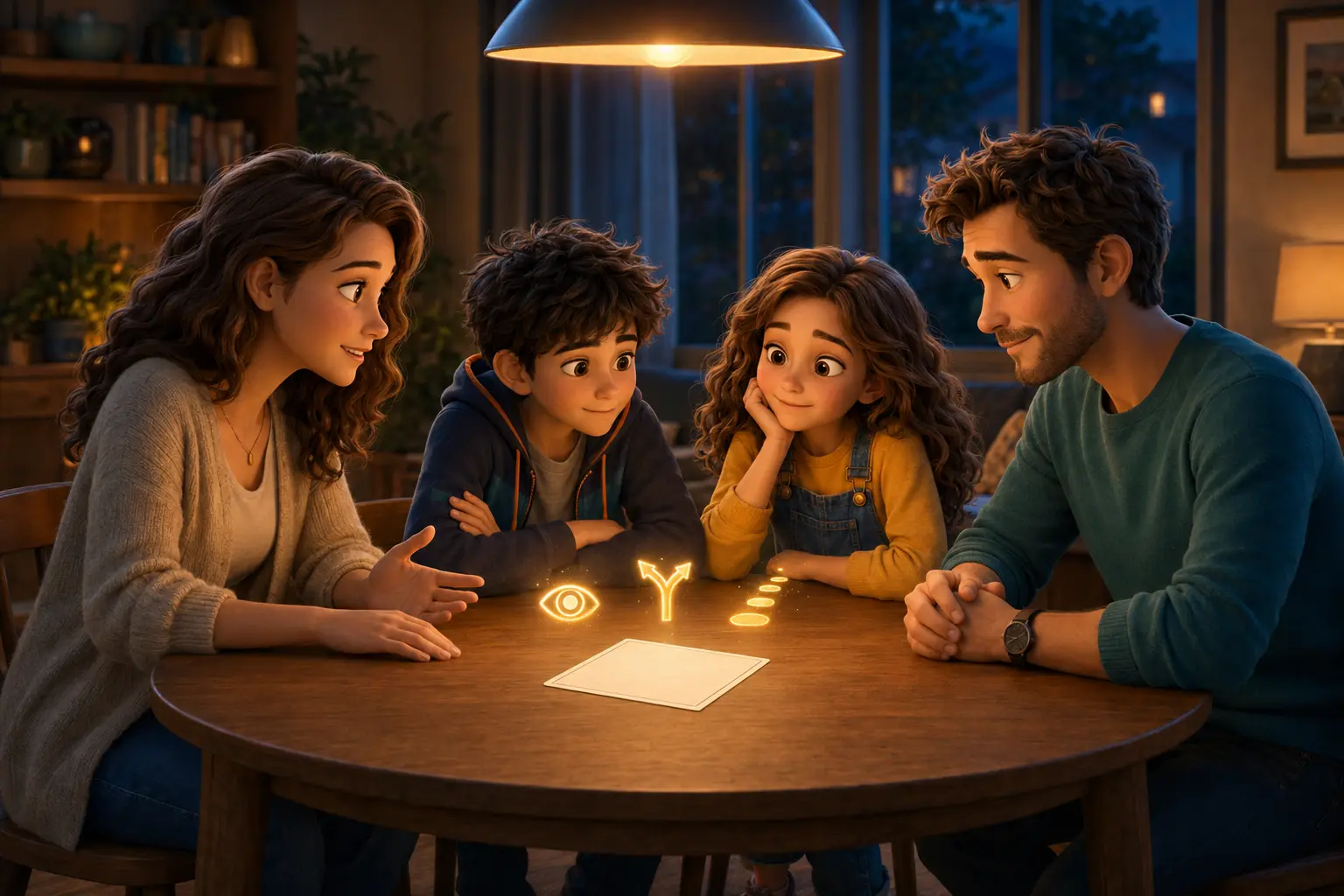
Before looking for someone to blame or rushing to give advice, we can pause, understand what happened, listen to different perspectives and decide together what to do next.

A family discussing a situation together
Our guiding principleFirst understand. Then decide.

Before you begin

Take a closer look at your own reactions

The parent test takes 10–15 minutes. It can help you recognise the strengths you already bring to your relationship with your child and the areas you may want to explore in the course.

Take the parent test

The first part is a gift

The first 1,000 families receive the first part of the family course as a gift

… / 1,000

Part one is currently free to access. Explore five family meetings with stories, questions and activities to help you talk together.

Start the course →

Why this course?

What happened has happened. The conversation can become a new experience

When an adult immediately explains what should have been done, a child may become defensive or withdraw. This course invites the family to approach the situation with curiosity and explore it together.

Adults take part alongside children, answering questions and sharing experiences from their own lives. The aim is not to reach identical conclusions, but to hear what each person has noticed.

The programme

Nine parts, from a first conversation to an ongoing family practice

The course is designed for families with children aged 9 to 12. Each part brings another life lesson into family conversations through stories, questions and practical tools.

Part 1A gift

Three tools for exploring a situation

Learn to separate a result from a judgement about a person, look at the roles of everyone involved, and reflect on experience together.

  • Three practical tools
  • Questions for family conversation
  • Ways to apply them to real events

All five family meetings and the parent guide are available.

Part 2Coming soon

Recurring patterns

Notice situations that keep recurring, understand your own part in them and look for a new action in place of a familiar response.

03–09

The journey continues

Parts three to nine will be introduced as they become available.

Inside the first part

Three tools for exploring a situation

Each tool can be used on its own. Together, they offer a way to move from what happened towards what to do next.

01 · Fact, not label

A result does not define a person

Separate an observable result from judgements and labels. A mistake tells us about a particular action or approach; it does not define the person.

What happened, and what was the result, without judging the person?
02 · Understanding responsibility

Three sides of a situation

Consider the part played by the person, other people and the circumstances. This helps us see responsibility more clearly, without blaming ourselves or shifting blame to others.

What depended on me, what depended on others, and what was a matter of circumstance?
03 · Making sense of experience

The experience map

Work through eight questions, from the facts, the desired result, thoughts, feelings and actions to the role of other people and circumstances, what you learned and what to do next.

What did the result show me, what can I put right now, and what will I do next time?

A shared conversation

Explore the situation together

Both the adult and the child answer questions and share their perspectives. An honest conversation about our own mistakes can help a child feel able to speak openly, too.

  1. 1
    PauseTalk when everyone is ready to listen.
  2. 2
    FactsEach person describes what they saw and heard.
  3. 3
    ChoiceNotice the decision and its consequences.
  4. 4
    Next stepChoose an action to take in the future.

Course and library

Understanding your own reactions can help you support your child

The course tools can be useful for adults, too. Explore the library before or after a family conversation and ask yourself: what does this help me understand about my child, and what might I learn about myself?

Explore the library →

Your first step

Get ready for a different kind of conversation

Start with a short preparation for parents. Then explore all five family meetings together.

Start the preparation →