

Help children notice what is happening instead of giving them a ready-made answer.
For children aged 9 to 12, parents and educators
If life is a teacher, experience is its language
Nine Lessons of Life is an educational project from the School of Mentometology. It helps children and adults explore mistakes, setbacks, conflicts and change, see the consequences of their decisions and learn from what they have lived through.
The first part of the project is open. Eight more lessons are to come.
01Every Experience Can Teach Us
The central idea
We cannot live a child’s life for them. But we can help them learn from life
Help them recognise when to try again, when to change their approach, and when to stop and ask for help.
Instead of blaming a child for a mistake, use what happened to begin an honest conversation and consider another choice.

The idea
Life has its own way of teaching
Life does not give lectures. It places us in situations where we observe, choose, act and meet the consequences.
Similar situations often return, giving us another opportunity to see more, understand our role and respond differently.
We looked for the recurring pattern in this learning and put it into simple language. That is how Nine Lessons of Life began: not as a set of rules for living, but as a guide to learning from our own experience.
The path of experienceFrom an event to reflection
- Event
- Observation
- Understanding
- Choice
- Action
- Result
- Reflection
Nine lessons
Nine lessons that stay with us throughout life
There is no need to memorise them. We can gradually learn to recognise them in what happens every day.
A mistake, setback, rejection or unexpected change does not define a person. It can show us what worked, what did not and what we might try differently.
Lesson resourcesWhen similar situations lead to the same result, it helps to look at our own actions as well as the circumstances.
Lesson resourcesDiscomfort can accompany growth, but it can also warn us of danger or tell us that we need help. It is important to learn to tell these signals apart.
Lesson resourcesWhat happened and our explanation of it are not the same thing. Seeing the difference gives us more freedom to choose.
Lesson resourcesEmpathy begins with trying to understand another person. A thoughtful conversation respects both their feelings and our own boundaries.
Lesson resourcesAcknowledging what happened does not mean approving of it or giving up. It means seeing where we really are so that we can act.
Lesson resourcesWhat we pay attention to influences our feelings, decisions and behaviour. Attention is a resource we can learn to direct.
Lesson resourcesOur values, self-respect and ability to listen to our feelings help us rely less on the approval of others and comparisons with them.
Lesson resourcesOur decisions affect other people. Maturity includes considering not only our own interests but also our impact on those around us.
Lesson resourcesThese are not nine rules for how to live. They are nine ways to see what is happening more clearly and make conscious choices.
The project
One idea. Several ways to experience it
Families can begin with a life situation, a conversation, an experiment or a question. Parents have practical tools, and children have space to reflect on their own experiences.
These formats complement one another and help families bring the ideas into everyday life.
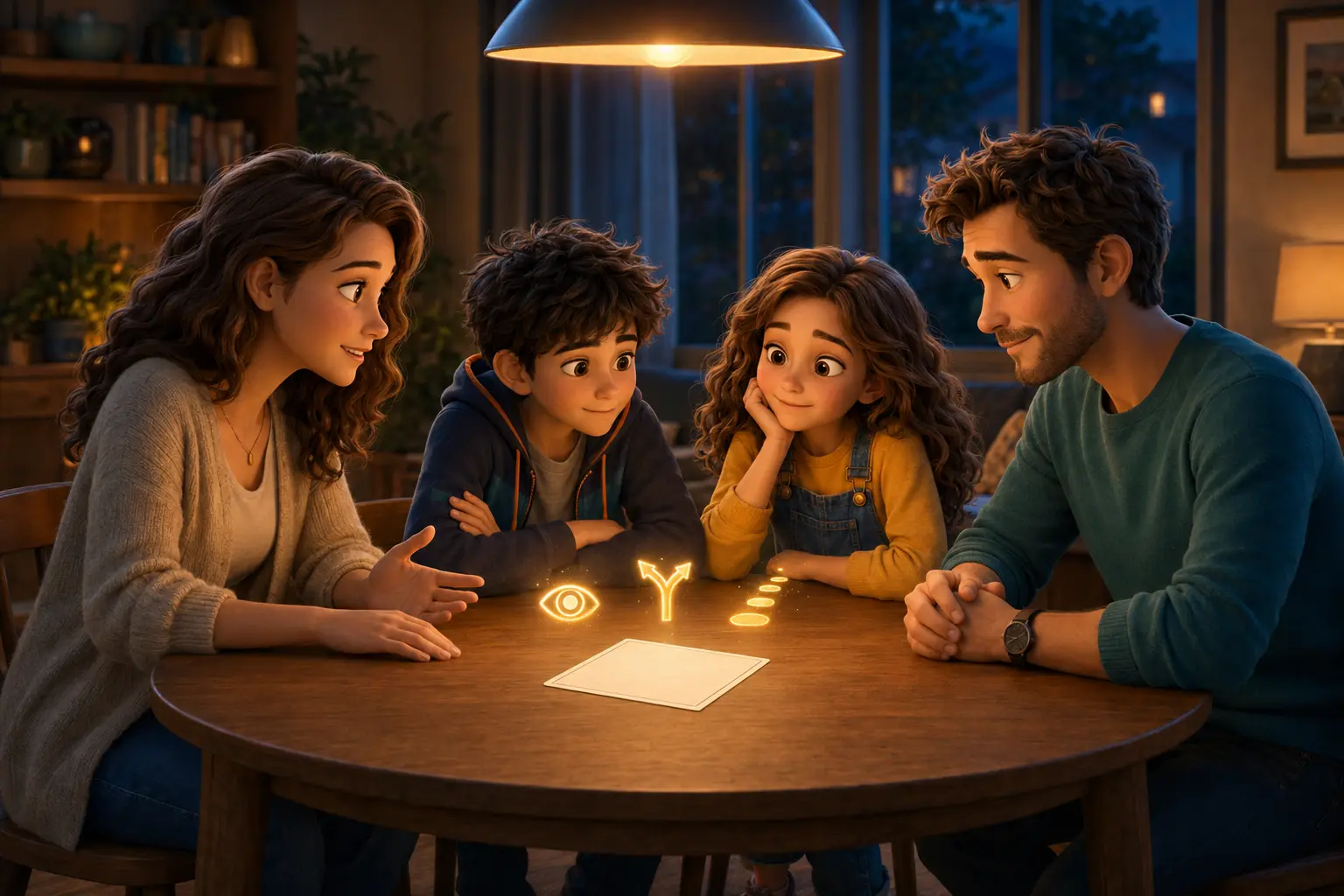 A conversation where everyone is heard
01 / Family course
Talking about difficult things without interrogation or lectures
The family course helps you apply the lessons to events that really happen to children and adults.
The first part introduces three tools for examining a situation. They help families separate facts from judgements, notice choices, see consequences and learn from what happened.
Take time to understand what really happened before looking for someone to blame or rushing to give advice.
Explore the course02 / Books
Nine lessons for different areas of life
The same approach can help people of different ages, in different relationships and social roles.
- Nine Lessons of Life
- Nine Lessons of Life for Families
- Nine Lessons of Life for Couples
- Nine Lessons of Life for Entrepreneurs
- Nine Lessons of Life for Society
The series is in preparation. The books will explore the nine principles through real decisions, relationships, crises, responsibility and human development.
About the books

03 / Parent test
What is your child learning from you?
Explore your strengths, familiar responses and possible blind spots in your relationship with your child.
In 10–15 minutes, receive a detailed map of seven parenting skills, a personal question to reflect on and one practical experiment.
Take the test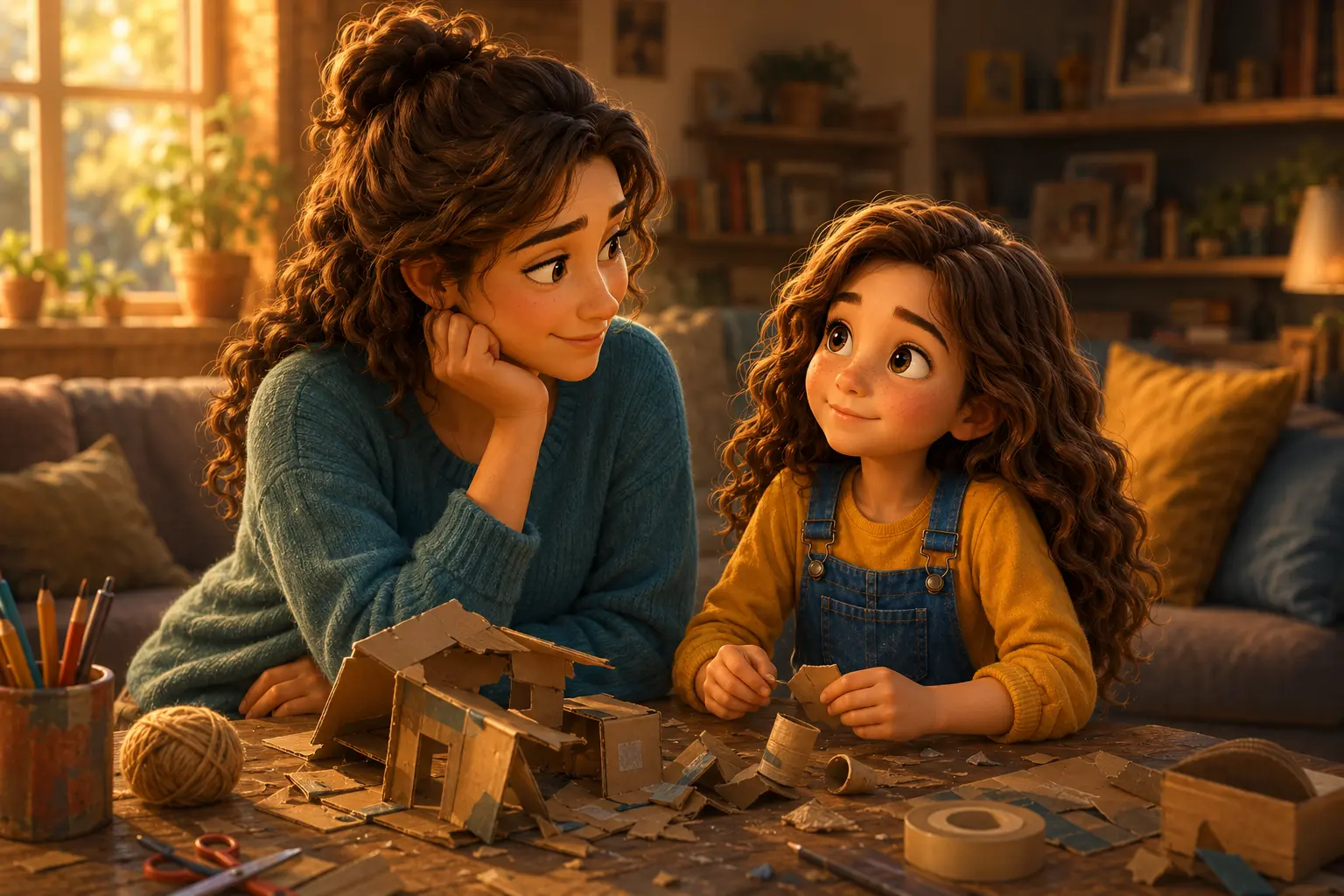

04 / Family experiments
52 family experiments
One experiment together each week. Try something a little differently, then talk about what you noticed in yourselves and each other.
Explore the experiments
05 / Library
Life School Library
Articles about trust, agreements, independence and difficult conversations. Start with a question that matters to your family today.
Explore the libraryHow it all connects
Explore. Discuss. Try. Reflect.
Explore
A life situation offers a starting point.
Discuss
The family course helps you talk about real events.
Try
Family experiments invite you to explore everyday life together.
Reflect
Books and the parent test offer more questions to consider.
Together these formats create a space where children and adults can gradually learn from their own experiences together.

Meet the characters
Meet Mira and Max
They are friends and classmates, but they see things differently. Mira is quicker to act, while Max likes to understand the details and do things well.
They make mistakes, argue and sometimes feel hurt. Along the way, they learn to notice what they feel, what they fear and what an experience might teach them.
Mira is brave and directMax is thoughtful and sensitive
Meet Mira and Max Then join them in the first lesson.The first lesson
Every Experience Can Teach Us
The first lesson explores mistakes, setbacks, rejection, conflict, unexpected change and other experiences children meet in everyday life.
A mistake does not say: “You are bad.”
A setback does not prove: “You are incapable.”
Rejection does not make a person less valuable.
Instead of asking “What is wrong with me?”, we can explore other questions:
- What actually happened?
- What was within my control?
- What happened as a result of my choice?
- What do I understand now?
- What might I try next time?
Explore “Mistake”
2–3 minutes · no account needed · try it alone or with an adult
Partnerships
Let’s help more families learn from life together
We welcome collaboration with responsible brands, educational organisations, children’s centres, foundations and media.


Begin together
The first lesson begins with a choice
Explore a life situation, make a choice, consider its possible consequences and compare your view with that of a child or another adult.
One short conversation may help you notice something about each other that you had not seen before.