
An event happens outside, while experience forms inside through a person’s history, attention, fears, values and present concerns. What matters is not a single correct conclusion but checking one’s lesson against reality and reconsidering it when needed.
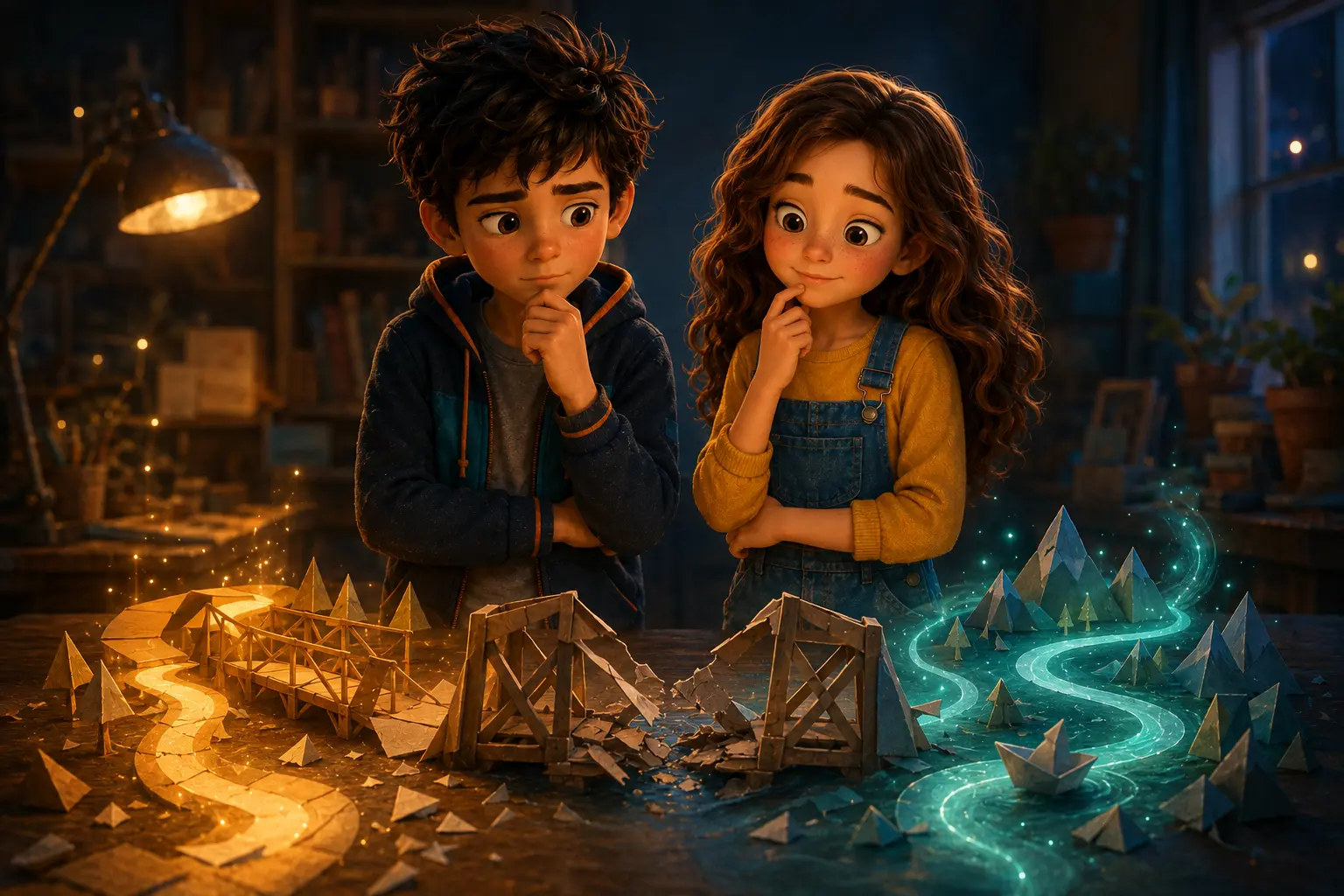
Two children receive the same poor mark. One thinks:
“I need to find where I went wrong.”
Another:
“I'm simply not capable of maths.”
A third is concerned less about the mark than their parents' reaction. A fourth shrugs and forgets in five minutes. The event and result seem identical. Yet each draws a different life lesson because no one encounters an event as a blank slate. They bring prior experience, expectations, fears, values and ideas about themselves and others. Strictly speaking, almost no two experiences are identical.
An event may be the same. Experience begins where that event meets a particular person.
The same event can be experienced differently
Imagine a teacher telling two children:
“This work needs to be redone.”
The words are the same. The first hears:
“There are mistakes to correct.”
The second:
“My work is bad.”
The third:
“The teacher is unhappy with me.”
The fourth:
“I'm being given a chance to improve.”
We often say the same thing happened to them. Psychologically these are already four different situations. A person reacts not only to an event, but also to the meaning they give it. That meaning greatly influences what happens next. One starts correcting, another becomes upset, a third makes excuses, a fourth takes an interest in the comments. Between an event and a life lesson stands the person making sense of it.
We do not notice everything in a situation
Any event contains more information than we can hold in attention at once. After a football match one child remembers the conceded goal, another the team's good play, a third not being selected to start, a fourth a teammate's support after a mistake. One match, but each person's attention cuts out a different fragment. That fragment often becomes material for a later conclusion.
The same is true of adults. After a family trip one remembers beautiful places, another difficult travel, a third conversations, a fourth money spent. We rarely encounter all reality at once. We encounter the part we noticed. An important School of Life skill is therefore more than drawing conclusions. Sometimes we first need to ask:
“What else happened here that I did not notice at first?”
This question can change the lesson considerably.
Previous experience becomes a lens
New experience never exists separately from the old. Imagine two children whose friends did not reply to messages. For a child used to reliable relationships, the first thought may be:
“Probably busy. They'll answer later.”
A child who recently suffered rejection by a group may decide:
“They don't want to talk to me again.”
The present event is the same, but the past changes how it is seen. This happens continually. If a child was mocked for a wrong answer, another mistake at the board will mean more than the mistake itself. If a previous attempt succeeded, a difficult new task may feel like an interesting challenge. If trust was seriously broken, a new acquaintance may bring caution.
Past experience becomes a lens through which we see the present. Sometimes it helps, sometimes it distorts. An important question after a significant event is:
“Am I seeing this situation as it is now, or reliving something from the past with it?”
That is a difficult question for a child to ask themselves. Gradually, however, noticing such connections makes a person freer. The past continues to influence them but stops invisibly controlling every choice.
We learn what matters to us now
Imagine a school competition. A child does not win. What might they take from it? If the result matters most now, they may reflect on preparation. If relationships matter, they notice who supported them after losing. If courage matters, the main discovery may be:
“I did go on stage, even though I was very afraid.”
If they doubted whether they liked the activity, the competition may help them understand:
“I don't want to continue.”
We notice especially well what relates to our current questions. Life seems to answer different people on different subjects even in similar circumstances. One finds a lesson about persistence, another about relationships, another about boundaries, another about stopping in time. None has to be the only correct lesson.
What becomes a lesson today may not have done so a year ago
The same person changes too. Imagine a child has met rejection several times. At nine it might mean:
“They don't love me.”
At eleven:
“Not everyone has to agree with me.”
Later:
“If this route is closed, what other options exist?”
The event is similar, but the ability to understand it has changed. This is one reason some lessons recur. Not necessarily because the person “didn't understand the first time”. Sometimes they meet a similar experience at another stage of development and can see what they could not before. We return many times to trust, rejection, responsibility, friendship, boundaries, loss, independence and choice. Each experience may deepen understanding a little. “We've already been through this” is not always fair. Outwardly, perhaps. But the child now is not quite the same person who went through it before.
One person seeks confirmation, another new information
A feature of thinking is that we often use events not to learn something new but to confirm what we already believe. If a child thinks, “I'm bad at making friends”, one conflict may prove:
“See, I knew it.”
Another child facing a similar conflict may think:
“I wonder where we stopped understanding each other?”
The first uses the event to confirm an existing belief; the second as new information. The difference is enormous. Sometimes it helps to ask:
“Did this situation really prove what you now think about yourself, or are there other ways to understand it?”
Not to force positive thinking, but to stop one situation automatically becoming a sweeping verdict:
“I always...”
“I never...”
“Everyone...”
“Nobody can be...”
Experience becomes more accurate when a person can hold several possible explanations without rushing to the most familiar.
The same result can follow different decisions
Two children can both get a top mark. It seems both had the same positive experience. But one prepared for a long time, understood a difficult topic and saw a connection between effort and result. The other copied. The result on paper is identical; the lesson is different. One gained confirmation:
“I can understand difficult material.”
The other:
“If I get around the system successfully, I can get a good result without working.”
The reverse also happens. Two children lose a competition. One prepared poorly. The other prepared as well as possible but met a stronger opponent. The same outcome does not mean the same cause. A life lesson cannot be drawn from result alone. Look at the whole path:
what I wanted, how I chose, what I did, what I expected and what happened.
Then experience becomes richer.
Opposite lessons can both be valuable
Persistence illustrates this. After a setback one child understands:
“I should not give up after the first attempt.”
After many unsuccessful months another understands:
“I don't have to keep pursuing every goal just because I've already spent so much effort on it.”
Both lessons can be right. In one situation maturity means continuing, in another stopping. One child learns to ask for help more often; another needs to stop turning to an adult after every difficulty and try independently. One learns to stand up for their own view; another learns to listen to someone else’s. One learns to say no, another not to reject everything new automatically. Life wisdom fits poorly into universal rules such as:
“Never give up.”
“Always trust people.”
“Always say what you think.”
Life is more complicated. The skill is not only knowing a good principle, but understanding which principle truly applies now.
Different lessons do not make every conclusion equally useful
If everyone understands experience differently, a simple conclusion seems possible:
“Then every lesson is right.”
But a person can draw a lesson that later obstructs their life. After betrayal:
“Nobody can be trusted.”
After defeat:
“If I'm not sure of winning, it's better not to take part.”
After criticism:
“I mustn't show anyone unfinished work.”
After one mistake:
“I'm incapable.”
These too are results of experience. But they draw sweeping conclusions from a single event. A useful life lesson must therefore be checked against reality. Does it make my understanding more accurate or more simplistic? Give more options or narrow them? Help me see people better or give everyone the same label? Teach engagement with life or avoidance? The adult's important task is not to replace the child's conclusion, but to help test it.
For example:
“One person really let you down. Does that mean nobody can ever be trusted?”
The child learns not only to draw lessons, but to check their quality. That is another step in learning from life.
One situation can contain several lessons at once
Sometimes we rush to end a story with one beautiful sentence.
“The main thing is that you understood you need to prepare better.”
But a meaningful event may have several layers. A child not selected may discover at once that they overestimated preparation; that comparison hurts them deeply; that they handle disappointment better than expected; that the coach offered useful feedback; that they genuinely want another attempt; and that a friend supported them without mocking.
Which lesson is primary? Perhaps none right now. Experience need not be reduced to one sentence. Sometimes it is better to leave it layered.
“I saw a lot because of this situation.”
That is closer to life's real complexity.
One person's lesson cannot simply be transferred to another
Parents often tell children stories from their own experience. This can be valuable.
“Something similar happened to me, and I understood...”
But there is a subtle boundary. What an event taught the parent is not necessarily the lesson the child must take. A father once regretted abandoning sport too early and now sees every difficulty of his son's as a lesson in persistence. A mother once suffered betrayal by a friend and pays special attention to her daughter's friendships. We inevitably view a child's life through our own history.
But their life is not a continuation of ours. One way to share it is:
“I once had a similar situation. This is what I took from it. But I'm interested in what you saw here.”
The parent shares experience without turning it into mandatory instruction. This respects the child's experience and life.
Hearing that others saw differently helps a child
There is a good way to broaden understanding without lecturing: discuss one event from several perspectives. For example:
“How did you see this quarrel?”
“How do you think your friend saw it?”
“What might someone standing nearby have noticed?”
“How might you look at it yourself in a month?”
This is not a search for one objectively correct version. The child learns something important:
my first understanding of a situation is not the whole situation.
That matters especially in conflict. When a person can look through another's eyes even temporarily, more responses become available. Agreement is not required. Better understanding is possible. Sometimes a new angle completely changes the lesson.
Experience can be reconsidered
We often think a life lesson forms once. An event happened. I drew a conclusion. The story ended. But people can return to the past and see it differently. At ten a child may think:
“I wasn't chosen because I was worse.”
Later:
“I really was less prepared then.”
Several years later:
“Perhaps that rejection first made me decide how much the activity mattered to me.”
The facts did not change. Their place in the person’s story did. This is an important part of radical trust in life.
We do not have to remain forever with the first meaning we gave an event.
Sometimes experience continues teaching long after the event. A person can transform not only what happens now, but their relationship to what has already been lived.
Radical trust in life does not promise everyone identical lessons
If life is seen as a teacher, it is easy to imagine each event contains one hidden correct meaning to be guessed. But life teaches differently. It presents us with reality, and we gradually discover what matters to us at that point in our lives. Rejection teaches one persistence, another the ability to let go. One conflict teaches speaking; another waiting to speak until calm.
One success teaches self-belief; another reveals the danger of overconfidence. One loss increases appreciation for what remains; another shows that a person can live after losing what seemed irreplaceable. Radical trust in life does not require finding a prepared moral. It offers another position:
“I will look attentively at what this experience can reveal to me now.”
Four questions to help find your lesson
Sometimes four questions are enough to help a child avoid treating the first automatic conclusion as final.
What exactly did you notice in this situation?
This reveals which part currently holds attention.
Why did that matter to you?
The child begins to notice values, expectations and fears.
Can what happened be viewed in another way?
This broadens the picture and reduces the power of the first interpretation.
What would you like to take forward from it?
Here experience becomes a personal lesson. In brief:
Notice → Understand the meaning → Look more broadly → Choose what to take.
The last step makes the lesson truly one's own. The parent did not announce what should be learned. The event did not automatically form a conclusion. The child participates in what meaning this experience will have in their life.
Life gives events. People create experience from them
That is why the same experience teaches people differently. Experience never consists only of what happened. At least two sides meet in it:
life, which brings an event, and a person, who responds to it.
With their history. Their questions. Their fears. Their values. Their level of understanding. The key task of Nine Lessons of Life is therefore not to teach all children to draw identical conclusions from identical situations. That would contradict learning from life. The task is more interesting: help a child attend to personal experience, not stop at the first reaction, see several sides, test conclusions against reality and choose what to take as a lesson.
A life lesson then stops being a ready-made answer hidden in a situation. It becomes the result of a meeting between a person and life. This is why life remains such an unusual teacher: it can give millions of people similar events while leaving each the opportunity to hear their own lesson.
From reading to experience
Explore a situation together
Talk about what happened, the choices available and what each choice might lead to. It is a chance to think together and hear each other's point of view.
Reflect on your relationship
What is your child learning alongside you?
Explore your everyday responses and discover areas you may want to pay closer attention to.
Explore the parent reflection →Almost finishedWhen you reach the end, this article will be marked as read on this device.
Share this article
Share an idea with other parents
Choose a way to share or copy the link.