
Children learn about consequences through their own experience, when they see how a choice and an action lead to a result. Rather than fixing every mistake or saying “I told you so”, explore what they decided, what followed and what they might do differently next time. Over time, this can help them think ahead before making a choice.
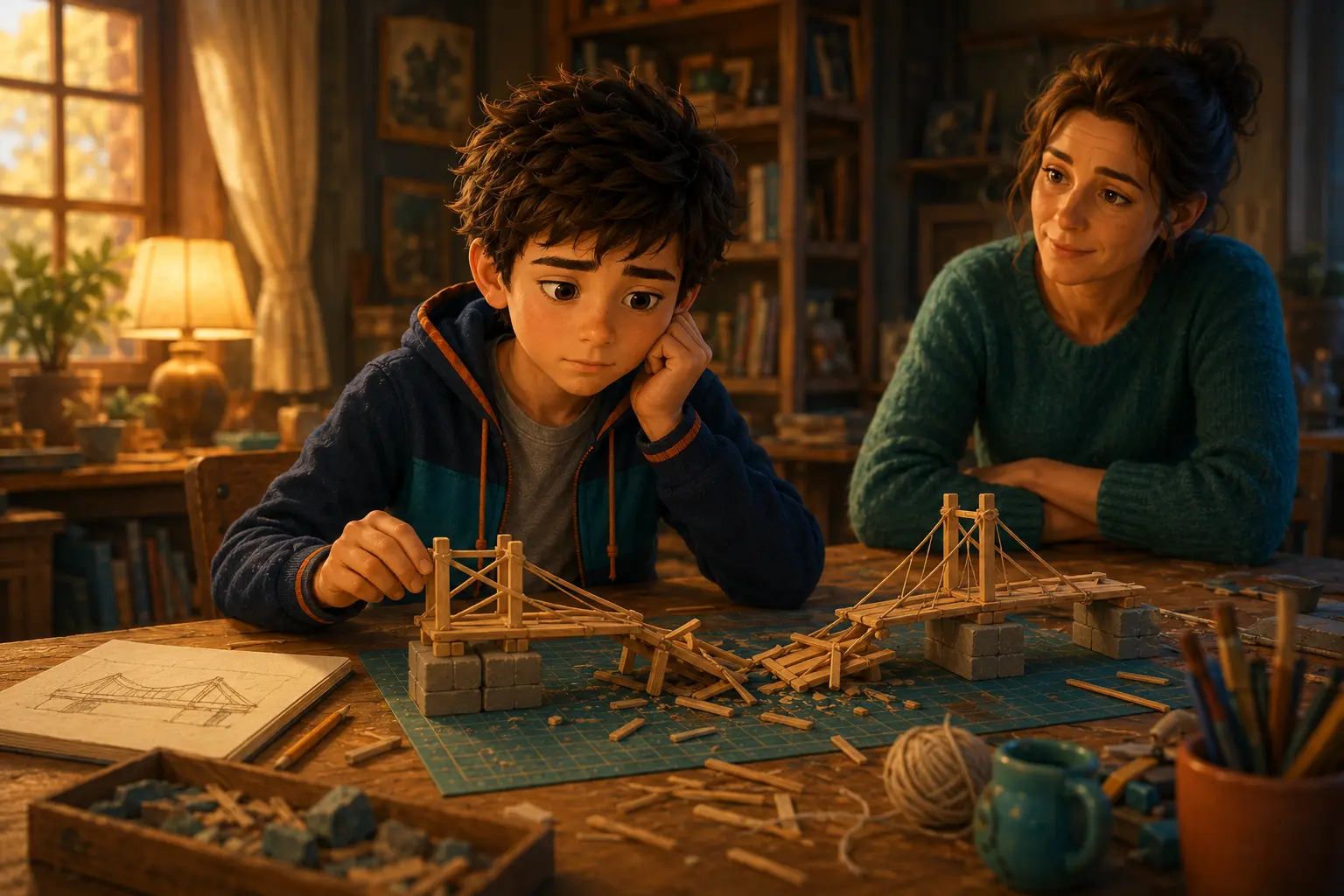
Children often understand the consequences of a decision only after they have experienced them. They did not study and got a poor grade. They spent all their money and could not buy something they really wanted later. They spoke rudely to a friend, who then stopped talking to them. They put off an important task and discovered in the evening that there was not enough time left.
To an adult, the connection between a decision and its result may seem obvious. To a child, it is not always so clear. If a parent immediately explains what happened and why, the child may hear a good explanation without learning to see the connection for themselves. The adult's task, then, is not to keep telling a child what their decisions will lead to. It is to help them gradually learn to notice those connections on their own.
Why children do not always think about consequences
When making a choice, children are often focused on what matters to them right now. They want to keep playing, and homework can be done later. They want to buy sweets, while the money they may need next week feels a long way off. They want to snap back because they feel hurt in the moment.
The future is still there, but it feels less immediate than the present. This does not necessarily mean a child is irresponsible. The ability to consider consequences develops gradually and is shaped in large part by experience. It is not enough to hear, “You need to think before you act.” Children need many opportunities to see how their own decisions connect with what happens afterwards.
Do not rescue your child from every consequence
One of the hardest things for parents is accepting that it can sometimes be useful for a child to experience the natural result of a decision. If a child forgets to take something they have been reminded about several times, a parent may want to rush in and fix it. If they spend their pocket money too quickly, the adult may want to give them more. If they leave work until the last minute, the temptation is to help them finish faster.
Sometimes help really is needed. But if an adult constantly removes the consequences of a child's decisions, the child learns that they can make a choice and someone else will deal with the result. The connection between choice and consequence becomes less clear. Sometimes it helps to resist the urge to rescue, not to make a child suffer, but to let them see where their decision led.
A consequence should help a child understand, not become a punishment
There is a difference between a consequence and a punishment. Imagine a child has put off packing their schoolbag several times. In the morning, they discover they cannot find something they need. The natural consequence has already occurred: they must look for it in a hurry and may have to leave without it.
If a punishment is added on top, their attention may shift entirely to the parent. Instead of thinking about their own decision, the child may focus on how unfairly they have been treated. The opportunity to learn from the experience can be lost. It is more useful to help the child see the connection: “You decided to leave it until later. This is what happened afterwards. What do you think about it now?”
Do not immediately say, “I told you so.” That phrase rarely helps a child reflect. The adult may indeed have warned them and may have been right. But the child does not need another reminder that a parent saw it coming. They need help understanding their own decision. “I told you so” makes the conversation about the parent being right. Asking, “What do you think led to that result?” puts the child's experience at the centre. The second approach helps develop the ability to see consequences.
Help your child trace the connection between a decision and its result
After something happens, try not to stop at “See what happens?” Instead, calmly return to the moment when a choice was made. Suppose your child did not finish a school project on time. Rather than giving a long lecture, ask when they realised time was starting to run short. Then ask what they decided to do at that point and how their decision affected the outcome.
Conversations like this help a child see an event as a sequence of connected actions rather than a matter of chance. Gradually they begin to understand: my choices influence the result. That is one of the foundations of responsibility.
Notice positive consequences too. There is a risk in discussing decisions only when something has gone wrong. Children also need to see the other side. They started preparing for a test early and felt more confident. They chose not to respond to a rude remark and avoided a bigger argument. They saved some pocket money and later bought something they had wanted for a long time. They asked for help in time and managed a difficult task.
If you focus only on mistakes, your child may come to see every conversation about consequences as another search for what they did wrong. Discussing good decisions as well gives a more accurate picture. Decisions do not just create problems. They can also help us achieve what we want.
Help your child look a little further ahead
As your child learns to notice consequences after an event, you can gradually help them think ahead at the moment of choice. Before they decide, ask a simple question: “What do you think will happen afterwards?” There is no need to turn every everyday choice into a serious analysis. Sometimes a few seconds are enough.
If your child wants to spend all their money now, you can ask what will happen if they want something else tomorrow. If they are about to put off preparing for something, ask what their evening might be like if they leave everything until later. The aim is not to steer them towards an answer you have already chosen. Children need to learn to think, not guess what their parent wants them to say.
Let your child sometimes make a less-than-perfect choice
This can be especially difficult. An adult can often see that a child's decision is unlikely to work out and feels a strong urge to stop them. When health, safety or serious consequences are involved, adults must step in. But in many ordinary situations, a small mistake may be more useful than a tenth warning.
When a child makes a choice, encounters the result and understands the connection for themselves, the experience can be much more memorable. Sometimes a small inconvenience today can help prevent more serious mistakes in the future.
Do not expect a perfect decision. Being able to see consequences does not mean a child will always choose correctly. Adults cannot do that either. We can understand the possible consequences and still make a mistake. We can make a decision that seems reasonable and get an unexpected result.
That is why it matters to help a child feel less afraid of making the wrong choice. What matters more is learning to pause afterwards and look at what happened. What was within their control? What did they overlook? What can be done now? What could they use from this experience next time? This is how the ability to reflect on one's own life gradually develops.
Consequences do not depend on the child alone
It is important to be precise here. A poor result does not always mean a poor decision. A child can prepare well and still receive a lower grade than expected. They can be friendly and still encounter rudeness from someone else. They can do their part in a group project and see the project fail anyway. If we teach children to look only for their own fault, we are not developing responsibility. We are creating the illusion that they are responsible for everything that happens. When looking back at what happened, it helps to distinguish what the child could influence from what was outside their control. That makes responsibility more realistic.
Children can learn to take responsibility for their decisions without seeing themselves as the cause of everything around them.
What matters most
The ability to see consequences cannot be passed on in one well-chosen sentence. It develops gradually through experience. A child makes a decision, sees the result, reflects on what happened and gradually comes to understand the connection between their choice and what follows. A parent's role is not to live their child's life for them or prevent every mistake in advance. It is to help them gradually understand something simple: my choices have consequences; I can reflect on them and use what I learn when I make another decision.
In time, the question an adult asks aloud, “What do you think this will lead to?”, may become a question the child asks themselves. That matters much more than simple obedience.
From reading to experience
Explore a situation together
Talk about what happened, the choices available and what each choice might lead to. It is a chance to think together and hear each other's point of view.
Reflect on your relationship
What is your child learning alongside you?
Explore your everyday responses and discover areas you may want to pay closer attention to.
Explore the parent reflection →Almost finishedWhen you reach the end, this article will be marked as read on this device.
Share this article
Share an idea with other parents
Choose a way to share or copy the link.